

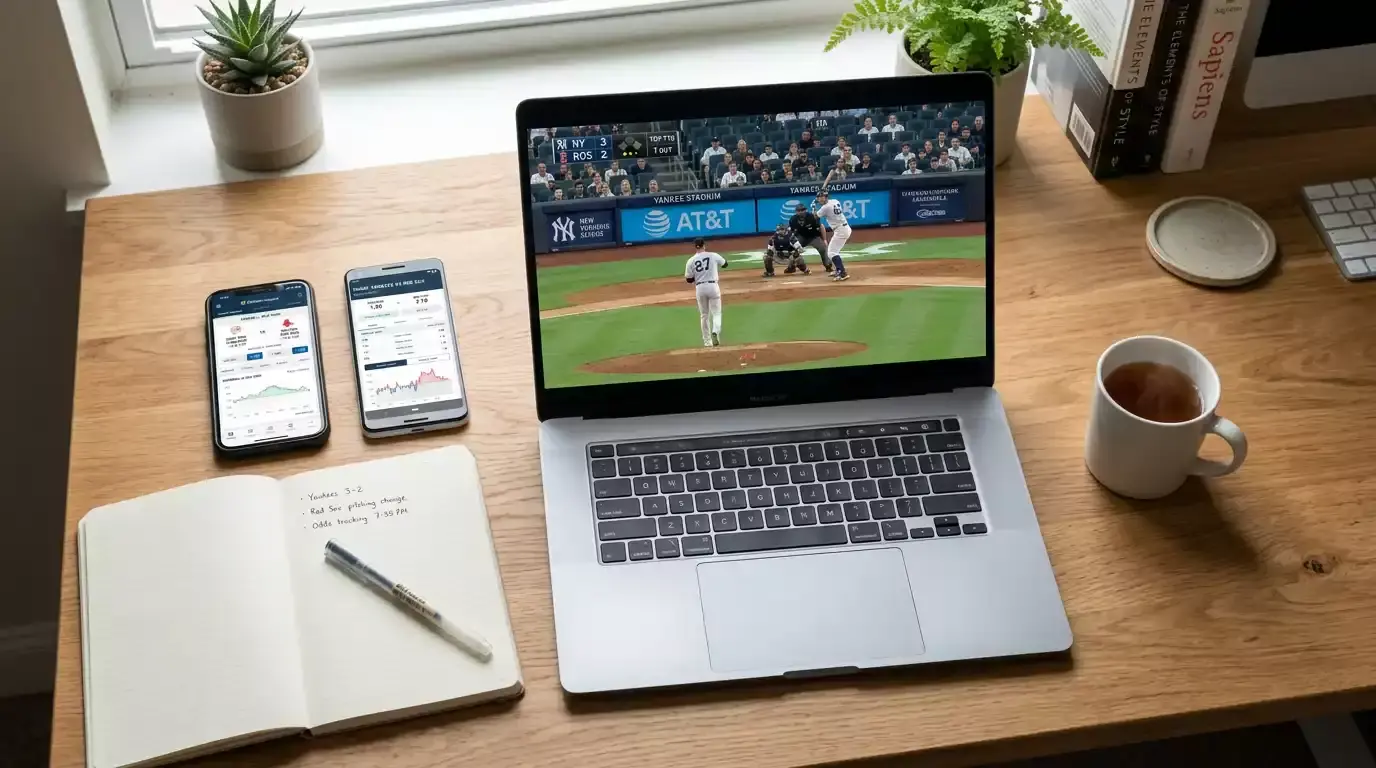
Maximizing Margins Through Strict MLB Line Shopping
I spent two years refining my MLB handicapping model before I realised that the single biggest improvement to my returns had nothing to do with sabermetrics or bullpen tracking. It was line shopping. Comparing the odds on the same game across four UK bookmakers and placing my bet at the best available price produced a larger improvement in my bottom line than any analytical upgrade I had made. That is not an exaggeration — it is what the numbers showed when I audited my 2023 season results.
MLB generates 2,430 regular season games, each one producing separate moneyline, run line, and total markets across every bookmaker. The prices on those markets are not identical. They differ because each bookmaker uses a slightly different model, carries a different liability profile, and responds to different pools of betting action. The gap between the best price and the worst price on a typical MLB moneyline is often 5-10 cents in American odds terms, which translates to roughly 1-2 percentage points of implied probability. Over hundreds of bets in a season, that margin compounds into the equivalent of several winning bets handed to you for free.
Understanding Bookmaker Overround and Why It Varies for MLB
The overround is the bookmaker’s built-in margin — the difference between the sum of implied probabilities across all outcomes and 100%. A two-way MLB moneyline market with implied probabilities of 60% and 44% has an overround of 104%, meaning the bookmaker takes a 4% margin. That 4% is what you are paying for the privilege of betting, and it varies across bookmakers and across sports.
For MLB, the overround on UK platforms tends to be wider than for football or major domestic sports. About 10% of UK adults bet on sports online, but only a fraction of those bet on baseball, which means the market is less liquid and the bookmaker has less incentive to keep margins tight. A typical Premier League match might carry a 3-4% overround on the three-way market; a typical MLB moneyline might carry 4-6% on UK platforms. Series prices, props, and totals carry even wider margins because the volume is lower still.
This variance is exactly why line shopping matters more for MLB than for football. If every bookmaker offered the same 4% overround on baseball, shopping would save you nothing. But when one bookmaker charges 4.5% and another charges 6%, placing your bet at the tighter book saves you 1.5 percentage points per wager. Multiply that by 200 bets over a season and you have reclaimed the equivalent of three winning bets worth of margin — without changing a single pick.
A Practical Guide to Comparing Lines on UK Platforms
Line shopping is not complicated, but it does require a small upfront investment of time and a willingness to maintain accounts across multiple bookmakers. I use four UK-licensed platforms for MLB betting, which gives me enough price variance to capture meaningful savings without the administrative burden of managing a dozen accounts.
My process is simple. For each game I want to bet, I open all four apps and compare the moneyline price on my target side. If the best price is at least 5 cents (in American odds) better than the worst price, I place the bet on the best-priced platform. If the prices are virtually identical, I default to the platform where I want to manage my bankroll or where I have the most available balance.
For totals and run lines, the comparison is slightly different. These markets can vary not just in price but in the number itself — one bookmaker might offer a total of 8.5 while another has 9, with different prices on each. When the total differs, I compare the implied probability at the line I would bet: if I want the over, I look at the implied probability of “over 8.5” on one platform versus “over 9” on another. The lower implied probability represents the better value, even if the actual line is different, because I am comparing what I have to give up to get the outcome I want.
One practical tip that saves me time: I check lines 2-3 hours before first pitch rather than at the opening. Opening lines on UK platforms for MLB are often set wider because the bookmaker is absorbing uncertainty, and they tighten as game time approaches. Checking closer to first pitch means you are comparing the most refined versions of each bookmaker’s price, which gives you a more reliable basis for comparison.
Line Shopping for Series Prices: Fewer Markets, Wider Gaps
If line shopping matters for individual game moneylines, it matters even more for series prices — but the practical challenge is that fewer UK bookmakers offer series price markets for MLB. During the postseason, most major platforms will carry World Series and LCS series prices. During the regular season, series price availability drops significantly, and you may only find the market on one or two of your four accounts.
When series prices are available across multiple bookmakers, the gaps between them tend to be wider than on the game moneyline because the market is thinner and the bookmaker relies more heavily on its model rather than on sharp-money adjustment. I have seen series price differences of 15-20 cents (American odds) across UK platforms for the same NLCS matchup — a gap that represents genuine money when you are staking multiple units on a series position.
The fewer options you have, the more each comparison matters. If only two bookmakers offer a regular season series price, and one has the favourite at -180 while the other has it at -200, taking the -180 price saves you a full 1.5% of implied probability. That is a meaningful edge gained in ten seconds of checking a second app. The UK bookmaker landscape for MLB is smaller than for football, which paradoxically makes each platform comparison more valuable because the variance between them is larger.
My final recommendation: keep a log of which bookmaker consistently offers the best MLB prices. Over the course of a season, you will notice patterns — one platform might consistently lead on moneyline favourites, while another offers better prices on totals or underdogs. That pattern tells you where to start your search each day, which reduces the time cost of line shopping from five minutes to two. In a sport with games nearly every day from late March through October, those saved minutes add up nearly as fast as the saved margin does.
